

A Museum, Library, & Exhibit Gallery
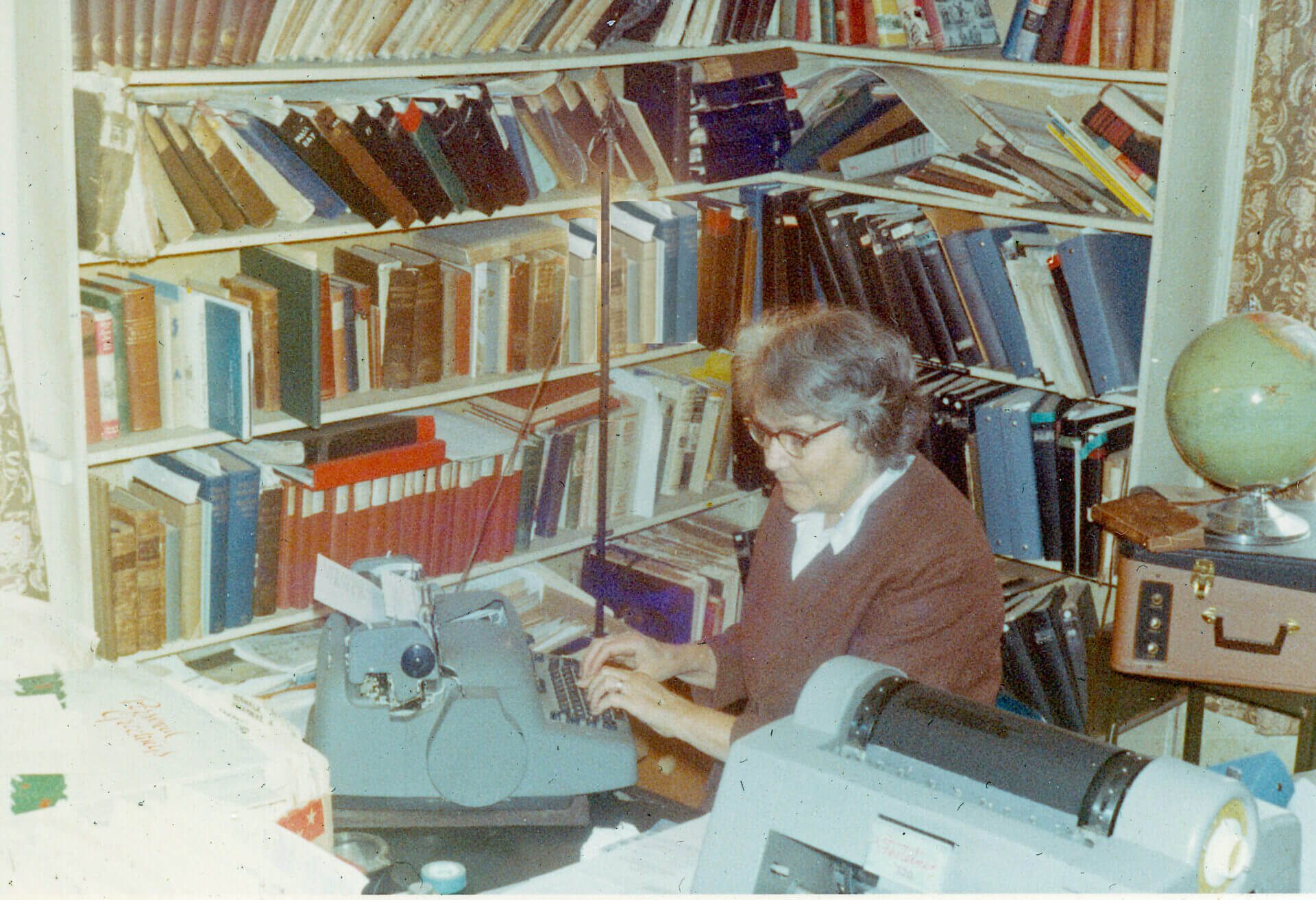
The Old Mystic History Center (formerly the Indian and Colonial Research Center) is a non-profit organization founded in 1965 to preserve the historical research of Eva Lutz Butler.
She was a woman who was passionate about history at a time when a woman's place was NOT leading archaeological digs, conducting anthropological interviews, or writing academic articles.
Are you passionate about history too? Our special research collections will help you find your roots and learn about your history.
In addition, we have accurate information for academic researchers, educators, archaeologists, students, and others to help you add to your story. We are a museum, library, and exhibit gallery located in the historic 1856 Mystic Bank building on Route 27 in Old Mystic, Connecticut.
OMHC Recives Grant Award
The Board of Directors of the Old Mystic History Center are pleased to announce a grant award of $4, 400 from the Charles B. Allyn Foundation. The funds were used to replace our oil tank.
![20260903_130553[1]](https://oldmystichistory.org/wp-content/uploads/2026/09/20260903_1305531-1152x1536.jpg "20260903_130553[1]")
Memory Bank: Call For Home Video Recordings

Help Us Preserve Old Mystic’s Story — Do You Have Home Videos to Share?
Our community’s history isn’t only found in books and archives—it lives in the everyday moments captured by the people who have called Old Mystic home. As part of our ongoing Oral History Project, we are working to collect, preserve, and share these personal glimpses into the past.
We are reaching out to ask for your help.
Do you have any old home video recordings that might include scenes from Old Mystic? We’re especially interested in footage that shows community events, local businesses, neighborhoods, traditions, or simply day-to-day life from years past. Even brief or informal clips can provide valuable insight into how our community has grown and changed over time.
Whether your recordings are on VHS tapes, camcorder cassettes, DVDs, or digital files, we would love the opportunity to review and preserve them. Our team can work with you to safely digitize older formats and ensure your materials are handled with care. Contributors will be fully credited, and we are happy to discuss any preferences you may have regarding how your footage is used.
By sharing your recordings, you are helping us build a richer, more personal record of Old Mystic’s history—one that future generations will be able to see and connect with.
If you think you might have something to contribute, or if you’d like to learn more, please contact us at 860-536-9771 or omhc06372@yahoo.com.
Thank you for helping us keep Old Mystic’s story alive!
Learn more about Old Mystic history. Follow our Facebook page.
Continuing the Legacy
For more than thirty years, members of the Indian & Colonial Research Center's Board of Directors have discussed updating the identity of the Center.
In January 2020, after a two-year deliberative process, the Board made the decision to rebrand the “Indian & Colonial Research Center” with the “Old Mystic History Center” to reflect the growth in our collections. Over the past 50 years, our archival collection has expanded to include many fine manuscripts, publications, photographs, and physical objects connected to the rich and varied history of our area.
While Indigenous and colonial materials are still a large part of our collection’s strengths, our responsibility as the governing board is to care for and promote all the items under our stewardship. We need our research center to maintain relevance, visibility, and viability in the changing world of the 21st Century. The change in our name attempts to address these issues in a realistic community-centered way.